Warning: include(): http:// wrapper is disabled in the server configuration by allow_url_include=0 in /home/nolahauntsu/public_html/phpmenu/side_menu.php on line 1
Warning: include(http://www.bachigraphics.com/saintisadore/index.php): failed to open stream: no suitable wrapper could be found in /home/nolahauntsu/public_html/phpmenu/side_menu.php on line 1
Warning: include(): Failed opening 'http://www.bachigraphics.com/saintisadore/index.php' for inclusion (include_path='.:/usr/lib/php:/usr/local/lib/php') in /home/nolahauntsu/public_html/phpmenu/side_menu.php on line 1
|
HAUNTED
NEW ORLEANS TOURS
|
Haunted
New Orleans Suggested Attractions
Links Of Interest
The
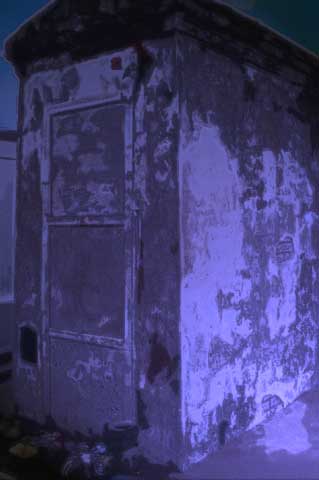
Tomb of Marie Laveau Saint Louis
Cemetery Number 1. New Orleans
Among the sites associated
with New Orleans voodoo is the
tomb of its greatest figure,
Marie Laveau. For several decades
this "voodoo queen"
held New Orleans spellbound-figuratively,
of course, but some would say
literally, as legends of her
occult powers continue to captivate.
She staged ceremonies in which
participants became possessed
by loas (voodoo spirits) and
danced naked around bonfires;
she dispensed charms and potions
called gris-gris, even saving
several condemned men from the
gallows; and she told fortunes,
healed the sick, and herself
remained perpetually youthful
while living for more than a
century-or so it is said (Hauck
1996; Tallant 1946).
The Wishing Tomb
Controversy persists over where
Marie Laveau and her namesake
daughter are buried. Some say
the latter reposes in the cemetery
called St. Louis No. 2 (Hauck
1996) in a "Marie Laveau
Tomb" there. However, that
crypt most likely contains the
remains of another voodoo queen
named Marie, Marie Comtesse.
Numerous sites in as many cemeteries
are said to be the final resting
place of one or the other Marie
Laveau (Tallant 1946, 129),
but the prima facie evidence
favors the Laveau-Glapion tomb
in St. Louis No. 1 (figure 1).
It comprises three stacked crypts
with a "receiving vault"
below (that is, a repository
of the remains of those displaced
by a new burial).
A contemporary of Marie II told
Tallant (1946, 126) that he
had been present when she died
of a heart attack at a ball
in 1897, and insisted: "All
them other stories ain't true.
She was buried in the Basin
Street graveyard they call St.
Louis No. I, and she was put
in the same tomb with her mother
and the rest of her family."
That tomb's carved inscription
records the name, date of death,
and age (62) of Marie II: "Marie
Philome Glapion, décédé
le 11 Juin 1897, ágée
de Soixante-deux ans."
A bronze tablet affixed to the
tomb announces, under the heading
"Marie Laveau," that
"This Greek Revival Tomb
Is Reputed Burial Place of This
Notorious 'Voodoo Queen' . .
. ," presumably a reference
to the original Marie (see figure
2). Corroborative evidence that
she was interred here is found
in her obituary ("Death"
1881) which notes that "Marie
Laveau was buried in her family
tomb in St. Louis Cemetery No.
1." Guiley (2000) asserts
that, while Marie Laveau I is
reportedly buried here, "The
vault does not bear her name."
However, I was struck by the
fact that the initial two lines
of the inscription on the Laveau-Glapion
tomb read, "Famille Vve.
Paris / née Laveau."
Obviously, "Vve."
is an abbreviation for Veuve,
"Widow"; therefore
the phrase translates, "Family
of the Widow Paris, born Laveau"-namely
Marie Laveau I. I take this
as evidence that here is indeed
the "family tomb."
Robert Tallant (1946, 127) suggests:
"Probably there was once
an inscription marking the vault
in which the first Marie was
buried, but it has been changed
for one marking a later burial.
The bones of the Widow Paris
must lie in the receiving vault
below."
The Laveau-Glapion tomb is
a focal point for commercial
voodoo tours. Some visitors
leave small gifts at the site-coins,
Mardi Gras beads, candles, etc.-in
the tradition of voodoo offerings.
Many follow a custom of making
a wish at the tomb. The necessary
ritual for this has been variously
described. The earliest version
I have found (Tallant 1946,
127) says that people would
"knock three times on the
slab and ask a favor,"
noting: "There are always
penciled crosses on the slab.
The sexton washes the crosses
away, but they always reappear."
A more recent source advises
combining the ritual with an
offering placed in the attached
cup: "Draw the three X's,
place your hand over it, rub
your foot three times against
the bottom, throw some silver
coins into the cup, and make
your wish" (Haskins 1990).
Yet again we are told that petitioners
are to "leave offerings
of food, money and flowers,
then ask for Marie's help after
turning around three times and
marking a cross with red brick
on the stone" (Guiley 2000,
216).
More on Marie
Laveau
http://www.hauntedneworleanstours.com/marielaveau/
The
New Orleans Voodoo Queen
http://www.hauntedneworleanstours.com/marielaveau/marielaveau/
More New Orleans
Attractions
Attractions and Tours? Not sure
what New Orleans tours and attractions
to enjoy? Check out our Web
site for the best New Orleans
attractions and tours for some
of the most interesting and
popular tours to visit on your
"HAUNTED" New Orleans
vacation.
Haunted New Orleans has
so many fun and exciting
attractions to see. And
when trying to do it all
it is difficult to know
where to actually begin.
What follows is a listing
and brief description
of some of the most popular
attractions in the Crescent
City.
|
St.
Louis Cathedral Jackson Square
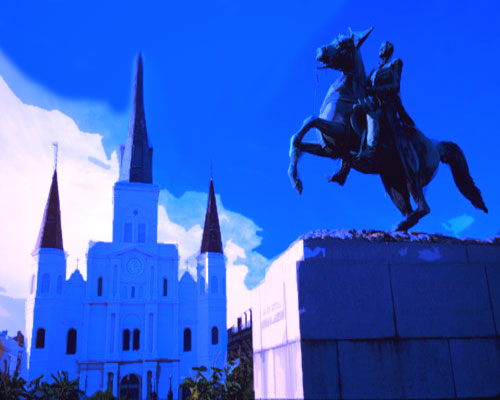
Towering over Jackson Square
is the Cathedral of Saint
Louis, King of France.The
prominent position of the
cathedral is fitting as the
people of New Orleans are
predominantly Catholic. The
cathedral is an active parish
and is the place of worship
for thousands of New Orleanians.
The cathedral that stands
in the square today is actually
the third structure to occupy
the site. The first church
was destroyed by a hurricane
in 1722. The second was destroyed
by the fire of 1788 which
consumed nearly every structure
in the French Quarter.The
construction of the church
one sees today began soon
after the devastating fire
with funds donated by Don
Almonaster. The church was
designated a cathedral in
1793.
Free tours available daily from
9 a.m. - 5 p.m.
Entergy
IMAX® Theatre
The wonders of nature are magnified
at Entergy IMAX® Theatre,
where larger-than-life adventures
explode with the help of the
world’s most advanced
motion picture technology. Entergy
IMAX® Theatre is located
next door to Audubon Aquarium
of the Americas, and is one
of only six in the world with
its spectacular flat screen,
single projection, IMAX®
3D and high-definition capabilities.
Opened
to sell-out crowds in 1995,
IMAX® is the finest motion
picture system in the world.
Visitors are immersed in images
of unsurpassed size, clarity
and impact. Sounds are enhanced
by a specially designed six-channel,
multi-speaker sound system.
The silver screen in the Theatre
is five-and-a-half stories
tall. The film used in IMAX®
is the largest in the world.
It is ten times the size of
standard 35-millimeter film.
All of this makes for an in-your-face
entertainment extravaganza
at the IMAX® Theatre.www.auduboninstitute.org
New
Orleans Botanical Garden

City Park - 504.483.9386
Located in City Park, the
Botanical Gardens is ten
acres of native & exotic
flora, sculptures, ponds
and fountains. This 30's
era garden is the sight
of on going educational
and special events.
Open Daily - Admission is
$3 - Children under 12 admitted
free.
Oak Alley Plantation
Vacherie - 225.265.2151
Oak Alley Plantation is
the most recognized plantation
in Louisiana. The 28 enormous
oak trees that line the
main road have been featured
in countless movies and
films. You're certain to
get a sense of Deja Vu when
you visit Oak Alley. The
plantation offers tours,
a Bed & Breakfast and
facilities for private parties.
Tours Daily from 9 a.m.
- 5 p.m. - Adults $10.00,
Young People 13 - 18 $5.00,
Children $3.00
Steamboat
Natchez Riverboat Cruise
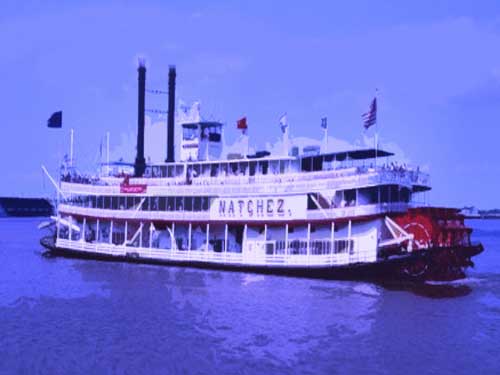
This is a great way to enjoy
3 attractions-in-one ... New
Orleans food and music during
a cruise down the Mississippi.
Since this is a real steamboat,
you'll hear the beautiful music
of its calliope (a musical instrument
powered by steam that is atop
the steamboat) as you stroll
through the French Quarter --
just follow the sounds to the
river! Choose from a daytime
cruise, or a dinner/jazz cruise
featuring the Dukes of Dixieland.
Musée Conti Wax Museum
It's the best-kept secret in
New Orleans. The Musée
Conti Historical Wax Museum
is Fun, Historical, Educational
AND Entertaining... a must see
in New Orleans! Founded in 1963,
"The WAX" tells the
fascinating story of New Orleans
from her founding to the present
day. Experience more than 300
years of History, Legend and
Scandal with the 154 life-size
figures displayed in historically
accurate settings.
Pitot
House
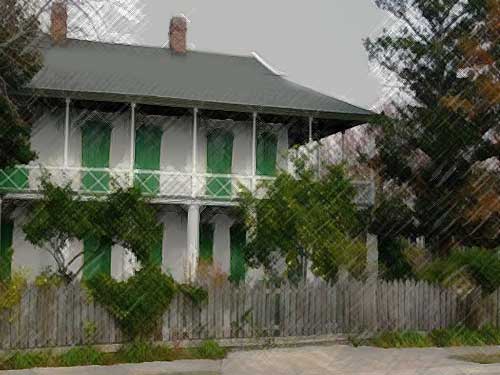
1440 Moss Street - City Park
- 504.482.0312
This was once the home of
Mayor James Pitot. This
French Colonial plantation
house was erected in 1799.
The home has been beautifully
restored and furnished with
period pieces.
Pitot House Museum
Nestled along the banks
of historic Bayou St. John
is the Pitot House Museum,
one of New Orleans’
most treasured landmarks.
This 18th-century Creole
Colonial plantation is also
the former residence of
New Orleans’ first
mayor, the Honorable James
Pitot.
The Pitot House Museum
is meticulously restored
to showcase its stucco-covered,
brick-between-post construction
and double-pitched hipped
roof. The home is carefully
furnished with Louisiana
and American antiques from
the early 1800s.
Adjacent to the property
is a 10,000-square-foot
side yard, available for
rental for elegant seated
dinners, wedding receptions
and corporate entertaining.
Visitors also enjoy a guided
tour of the home and “parlor
garden”, filled with
indigenous flowers, vegetables,
herbs and cash crops such
as sugarcane, cotton, tobacco
and indigo.
The stately home, located
at 1440 Moss Street, is
now the property of the
Louisiana Landmarks Society
and on the National Register
of Historic Places.
Open Wednesday - Saturday
10 a.m. - 3 p.m. - Adults
$3, Seniors $2 -Children $1,
more information, directions,
and group/guided tour rates,
contact the Pitot House Museum
at (504) 482-0312, or visit
www.pitothouse.org.
Open 7 Days-
Adults $9.75, Seniors $7.50,
Children $5.00
Louisiana
State Museum
504.568.6968
The Louisiana State Museum is
dedicated to the preservation
of the history and heritage
of Louisiana. The State Museum
includes several historic buildings
and museums all located in the
French Quarter. The price of
admission is $4 for Adults,
$3 for Seniors and children
under 12 are admitted free.
Admission allows entry to the
following museum buildings.
The Cabildo
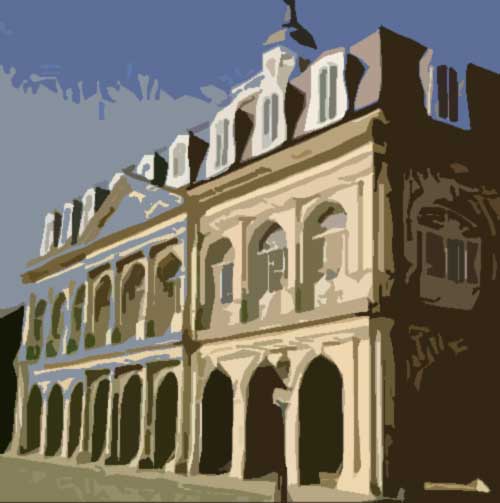
701
Chartres Street - Jackson
Square
In
1988, the Cabildo nearly burned
to the ground. After an extensive,
five year renovation, the
Cabildo has been restored
to its former glory.
The Spanish constructed the
Cabildo in 1795 to house the
spanish colonial city council.
In 1803, the documents transferring
the Lousiana Purchase Territories
from France to the United
States were signed in this
very building. After the signing
of the Lousiana Purchase,
the Cabildo was transformed
into the City Council of New
Orleans.
In its long history, the
Cabildo has served the city
in many ways. From 1853
to 1910, the Cabildo housed
the Supreme Court of Louisiana.
Since 1911 theCabildo has
operated as the Louisana
State Museum.
The Cabildo
A National Historic Landmark
701 Chartres
St., New Orleans, LA 70116
For General Information
and Admission.
or call
(504) 568- 6968 | 1-800-568-6968
| Fax (504) 568-4995
The site of the Louisiana
Purchase Transfer and the
flagship building of the
Louisiana State Museum historical
museum complex, the Cabildo
was constructed in 1795-99
as the seat of the Spanish
municipal government in
New Orleans. The name of
the governing body who met
there was the "Illustrious
Cabildo" or city council.
Over the years, the building
also served as the home
of the Louisiana Supreme
Court; it was here that
decisions in the nationally
significant Slaughterhouse
and Plessy vs. Ferguson
cases were handed down.
It was established as the
home of the Louisiana State
Museum in 1911. In 1988
the Cabildo was severely
damaged by fire. Over the
next five years, the landmark
was authentically restored
using 600-year-old French
timber framing technology.
It reopened to the public
in 1994 with a comprehensive
exhibit focusing on Louisiana's
early history.
The Presbytere
751 Chartres Street - Jackson
Square
Originally
the residence for the priests
of the St. Louis Cathedral,
this Spanish Colonial building
now houses the State's collection
of paintings, art, and historic
photographs. http://www.neworleansmuseums.com/mardigrasmuseums/presbytere.html
D-Day
Museum
The National World War II Museum
is a national treasure
Dedicated
in 2000 as The National D-Day
Museum and now designated by
Congress as the country’s
official World War II Museum,
this remarkable attraction illuminates
the American experience during
the WWII era with moving personal
stories, historic artifacts
and powerful interactive displays.
From the Normandy invasion to
the sands of Pacific Islands
and the Home Front, the Museum
brings to life the teamwork,
optimism, courage and sacrifice
of the men and women who won
the war and changed the world.
http://www.ddaymuseum.org/
Mardi Gras World
Visit Mardi Gras World .. with
thousands of sensational sculptured
props and breath-taking giant
figures -- it's the place where
Mardi Gras is made. You'll see
the artists as they build the
floats for next year's Mardi
Gras .. great place to get the
Mardi Gras spirit year-round,
and every tour includes free
king cake -- don't forget your
camera!
The
Old U.S. Mint
400 Esplanade Avenue
This building found at the corner
of Decatur and Esplanade, near
the French Market, was erected
in 1835 as a branch of the United
States Mint. The Mint once turned
out coin at a rate of $5 million
a month. The Mint operated from
1838 to 1862. During the Civil
War, the Mint was captured and
used to coin confederate currency.
When federal forces captured
New Orleans in 1862, William
B. Mumford was hanged in front
of the Mint for tearing down
the United States flag. After
the Civil War, the Mint was
put back into operation from
1879 to 1910.
When the Mint ceased operating,
it remained a vacant property
until 1932 when the United States
Coast Guard moved in and used
the building as a federal prison.
Today the Mint houses a restored
"Desire" street
car and a New Orleans Mardi
Gras & Jazz museum.
The only building in America
to have served both as a U.S.
and Confederate Mint was built
in 1835 during the presidency
of Andrew Jackson who had
advocated for its establishment
in order to help finance development
of the nation's western frontier.
Renowned architect William
Strickland designed the building
using the then-popular Greek
Revival style. Minting commenced
in 1838. In 1861, when Louisiana
seceded from the union, state
authorities seized the property
and transferred it to the
Confederate Army. For a short
time it was used to mint Confederate
currency and to house Confederate
troops. This ended when New
Orleans was occupied by federal
forces. Following the Civil
War, during the period of
Reconstruction, minting of
U.S. coins resumed. Minting
operations ceased in 1909
and, for the next 57 years,
the Mint served a variety
of official purposes. In 1966
the landmark was transferred
to the state and in 1981 opened
to the public as a State Museum
site. http://lsm.crt.state.la.us/mintex.htm
Harrah's
Casino
Voted "Best Casino"
by the readers of "Casino
Player," Harrah's is
located just steps away from
the Quarter. Harrah's has
thousands of the newest slots
and hundreds of action-packed
table games. Our brand new
casino beautifully represents
all parts of the city of New
Orleans, features a mini Mardi
Gras parade each day, and
tons of entertainment year-round!
Royal Carriages
Take a carriage ride while
you're in New Orleans ...
and enjoy a tour of the French
Quarter (garden district tours
available, too!) Quaint mule-drawn
carriages take you past many
landmarks of New Orleans,
including Bourbon Street,
the mighty Mississippi, and
Jackson Square.
A
few interesting Haunted Ghost
links we suggest you should
visit.
SOME
WEB SITES LISTED HERE MAY
NOT BE ACTUALLY HAUNTED
NEW ORLEANS WEB SITES, BUT
PLEASE VISIT THEM ANYWAY
AND GIVE THEM A REAL SACRE!
French
Quarter Festival
April
11-13, 2008
First on the calendar is the
French Quarter Festival, which
started in 1984 as a small
music festival attended primarily
by locals. It still retains
the down-home hospitality
of its roots - admission is
free, for instance, and most
of the performers are locals
- but the festival has grown
tremendously through the years.
In 2005, the French Quarter
Festival beat even its own
expectations for attendance
with approximately half a
million people turning out
for the weekend outdoor party.
Once
again this year, the festival
will be a three-day music
showcase, using the historic
streets of the French Quarter
and the scenic vistas of the
linear park along the Mississippi
River as its festival grounds.
Dixieland bands play traditional
numbers under lacy iron balconies
at regular intervals along
Bourbon and Royal streets,
more contemporary bands ranging
from rock and funk to reggae,
zydeco and New Orleans brass
hold court on the larger riverfront
stages. Meanwhile, the heart
of the French Quarter - Jackson
Square - becomes the scene
of what the festival calls
"the world's largest
jazz brunch." Performers
sing and play at one end of
the landscaped square, while
festival goers take their
pick of dozens of food options
from booths ringing the square
set up by local restaurants
and bars - serving everything
from beef brisket to crawfish
crepes to po-boys and meat
pies. All the while, the merchants
of the French Quarter offer
shady respite and a chance
to shop for cool things you'd
never see in a suburban mall.
For
updates on the performance
schedule and food options,
check the festival's official
Web site at www.frenchquarterfestivals.com.
|
|
New Orleans Mardi Gras Parade
Schedule
Mardi Gras Parade Calendar
Greater New Orleans Area
Preliminary Mardi Gras schedule
for 2008, times and routes
subject to change.
MARDI
GRAS PARADE SHEDULE
OFFICIAL
WEB SITE www. mardigrasparadeschedule.com
SATURDAY, JANUARY 6
•
Phunny Phorty Phellows -
New Orleans
SUNDAY,
JANUARY 12
•
Claude - Slidell 1:00 p.m.
SUNDAY,
JANUARY 13
•
Slidellians - Slidell 1:00
p.m.
SATURDAY,
JANUARY 19
•
Krewe du Vieux - French
Quarter 7:00 p.m.
• Metairie Cub Scouts
Mardi Gras parade
• Bilge - Slidell
12:00 p.m.
• Driftwood - Kenner
1:00 p.m.
SUNDAY, JANUARY 20
•
Little Rascals - Metairie
12:00 p.m.
• Perseus - Slidell
1:00 p.m.
• Pearl River Lions
Club - Pearl River 1:15
p.m.
FRIDAY,
JANUARY 25
•
Oshun - Uptown 6:00 p.m.
• Pygmalion - Uptown
7:00 p.m.
• Atlas - Metairie
6:00 p.m. - CANCELLED
• Excalibur - Metairie
7:00 p.m.
• Cleopatra - Westbank
6:30 p.m.
• Eve - Mandeville
7:00 p.m.
• Hercules - Houma
6:00 p.m.
SATURDAY,
JANUARY 26
•
Pontchartrain - Uptown 1:00
p.m.
• Shangri-La - Uptown
2:00 p.m.
• Sparta - Uptown
6:00 p.m.
• Pegasus - Uptown
6:45 p.m.
• Caesar - Metairie
6:00 p.m.
• Push Mow - Abita
Springs 11:00 a.m.
• Olympia - Covington
6:00 p.m.
• Mona Lisa &
Moon Pie - Slidell -
• Tee Caillou - Chauvin
12:00 p.m.
• Aquarius - Houma
6:30 p.m.
SUNDAY,
JANUARY 27
•
Carrollton - Uptown 12:00
p.m.
• King Arthur - Uptown
1:15 p.m.
• Barkus - French
Quarter 2:00 p.m.
• Rhea - Metairie
2:30 p.m.
• Centurions - Metairie
5:30 p.m.
• Alla - Westbank
12:00 p.m.
• Knights of Nemesis
- St. Bernard 2:00 p.m.
• Dionysus - Slidell
1:30 p.m.
• Hyacinthians - Houma
12:30 p.m.
WEDNESDAY, JANUARY 30
•
Ancient Druids - Uptown
6:00 p.m.
• Thor - Metairie
7:00 p.m.
THURSDAY,
JANUARY 31
•
Babylon - Uptown 5:45 p.m.
• Chaos - Uptown 6:30
p.m.
• Muses - Uptown 7:30
p.m.
FRIDAY,
FEBRUARY 1
•
Hermes - Uptown 6:00 p.m.
• Krewe d'Etat - Uptown
6:30 p.m.
• Morpheus - Uptown
7:45 p.m.
• Aquila - Metairie
7:00 p.m.
• Knights of Jason
- Metairie 7:30 p.m.
• Selene - Slidell
6:30 p.m.
• Orpheus - Mandeville
7:00 p.m.
• Aphrodite - Houma
6:30 p.
SATURDAY,
FEBRUARY 2
•
Iris - Uptown 11:00 a.m.
• Tucks - Uptown 12:30
p.m.
• Endymion - Uptown
4:30 p.m.
• Isis - Metairie
6:00 p.m.
• Vulcan - River Ridge
6:00 p.m.
• NOMTOC - Westbank
10:45 a.m.
• Bush - Bush 9:00
a.m.
• Salt Bayou - Slidell
2:00 p.m.
• Mardi Gras - Houma
6:30 p.m.
SUNDAY,
FEBRUARY 3
•
Okeanos - Uptown 11:00 a.m.
• Thoth - Uptown 11:30
a.m.
• Mid-City - Uptown
2:00 p.m.
• Bacchus - Uptown
5:15 p.m.
• Corps de Napoleon
- Metairie 5:30 p.m.
• Adonis - Westbank
12:00 p.m.
• Grand Isle Independent-
Grand Isle 5:30 p.m.
• Tchefuncte - Madisonville
2:00 p.m.
• Terreanians - Houma
1:00 p.m.
• Montegut - Houma
2:00 p.m.
MONDAY,
FEBRUARY 4
•
Proteus - Uptown 5:15 p.m.
• Orpheus - Uptown
5:45 p.m.
• Zeus - Metairie
6:30 p.m.
• Cleopatra - Houma
6:30 p.m.
MARDI
GRAS DAY, FEBRUARY 5
•
Zulu - Uptown 8:00 a.m.
• Rex - Uptown 10:00
a.m.
• Elks Orleans - Uptown11:30
a.m.
• Crescent City -
Uptown after Elks
• Argus - Metairie
10:00 a.m.
• Elks Jefferson -
Metairie after Argus
• Jefferson Trucks
- Metairie after Elks
• Lions - Covington
10:00 a.m.
• Covington - Covington,
after Lions
• Grela - Gretna 11:00
a.m.
• Chocktaw - Gretna
12:00 p.m.
• Houmas - Houma 12:00
p.m.
• Kajuns - Houma follows
Houmas
• Bonne Terre - Houma
3:00 p.m.
• Skunks - Lacombe
1:00 p.m.
• Chahta-Ima - Lacombe
1:30 p.m.
MARDI
GRAS PARADE SHEDULE
OFFICIAL
WEB SITE 2008 www.mardigrasparadeschedule.com
* indicates
best or most popular New
Orleans Mardi Gras Parade
"must- see, Mardi Gras
Parades must - experience
parades"!
Early
2008 Mardi Gras New Orleans
Hotel reservations are advised*
Mardi Gras means "Fat
Tuesday" in French
and was given the name because
of the feasting (and partying)
that would occur on this
last night before the beginning
of Lent, the Christian period
of self-denial and abstinence
that ends with Easter. Fat
Tuesday can occur on any
Tuesday from Feb. 3 through
March 9, but is always 47
days before Easter. Today,
Mardi Gras is characterized
by its parades. There are
more than 70 parades held
in the four parishes of
Orleans, Jefferson, St.
Bernard and St. Tammany.
The parades begin in January
but the full-blown celebration
that is Mardi Gras is truly
under way in the days right
before and on Fat Tuesday.
Ground zero for Mardi Gras
is the French Quarter, where
streets are packed with
people in search of beads
thrown by patrons from the
balconies. While the festivities
have a reputation for being
awash in debauchery, many
families find the kid-friendly
side of Mardi Gras by seeking
out less-crowded and tamer
areas.
MARDI
GRAS PARADE SHEDULE
OFFICIAL
WEB SITE 2008 www.mardigrasparadeschedule.com
|
|
|
Advertise
with www.hauntedneworleanstours.com.
We
won't send you just a ghost visitor,
but real live people to see and
explore your haunted web site.
|
|
|
|
|